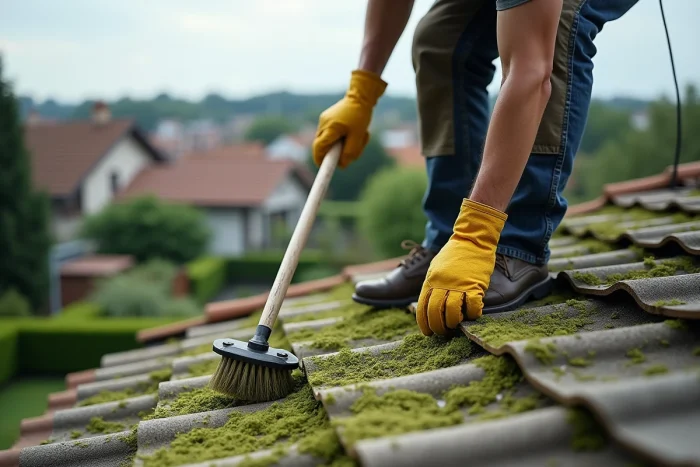
The appearance of green stains on roofs in temperate regions is not trivial. Contrary to popular belief, recent materials are not spared from the proliferation of algae and microorganisms, even in the absence of nearby trees.
Persistent humidity, the orientation of the roof, and the quality of the covering play a role in this phenomenon. Sometimes, seemingly wise maintenance actions pave the way for an accelerated spread of these invasive plants. In recent years, the trend has shifted towards more environmentally friendly solutions capable of sustainably slowing the progression of moss and lichens on the roof.
Recognizing the causes of the greening of your roof: factors and signs to watch for
The presence of moss, lichens, and algae on the roof is neither a fatality nor a simple effect of time. Several elements favor the establishment of these organisms on tiles, slates, or fiber cement sheets. Humidity plays a pivotal role: frequent precipitation, lack of effective ventilation, or shade cast by neighboring trees plunge the roof surface into an environment conducive to colonization. The most porous materials, such as terracotta tiles, concrete, or fiber cement, absorb more water and accelerate the development of microorganisms.
Some signs are unmistakable and allow for quick identification of the problem:
- Green or black stains on the tiles, often persistent even after a simple rinse
- Clearly visible moss deposits, sometimes slippery in wet weather
- Stubborn stains that embed deeply into the material
These indicators signal a well-established activity of microorganisms. Moss, by retaining water, makes the tiles more vulnerable to cracks and breakage, especially during freezing periods. Lichens, on the other hand, produce acids that attack the surface, accelerating wear and weakening the covering.
There are also certain warnings to take seriously: tiles becoming brittle, chipping during freezes, water infiltration into the framework, or accumulation of plant debris in the gutters. These symptoms indicate a weakened roof that requires immediate action with solutions against algae on the roof. Regular maintenance, regular pruning of surrounding trees, and systematic cleaning of gutters are among the most effective means to limit the establishment of microorganisms and preserve the roof’s integrity.
What methods should be prioritized to effectively eliminate moss, algae, and lichens?
To preserve the roof, the most respectful method is to opt for manual cleaning. A soft brush, patience, and meticulous work: this approach allows for the detachment of moss, lichens, and algae without eroding or damaging the tiles. It is better to avoid bleach, which damages the supports, accelerates their wear, and generates pollutants in rainwater. Instead, prefer gentler solutions: baking soda mixed with warm water, applied locally, or diluted white vinegar, which neutralizes acidity and limits the rapid return of microorganisms.
High-pressure cleaning may seem tempting to save time, but it weakens the tiles, especially if they are old or porous. Low pressure, on the other hand, cleans safely and is sufficient to remove green deposits. For hard-to-reach or large roofs, drones and remote-controlled robots offer a safe and precise alternative for moss removal.
After cleaning the surface, it is recommended to apply an anti-moss treatment or a water-repellent treatment. The latter forms an invisible shield against moisture, delaying the return of vegetation. Some protective granules included in the covering slowly release anti-algae agents that strengthen the roof’s resistance over several seasons. The choice of solution should always take into account the nature of the material and its environmental impact: this is the key to a long-term protected roof.
Sustainable and ecological solutions to protect your roof in the long term
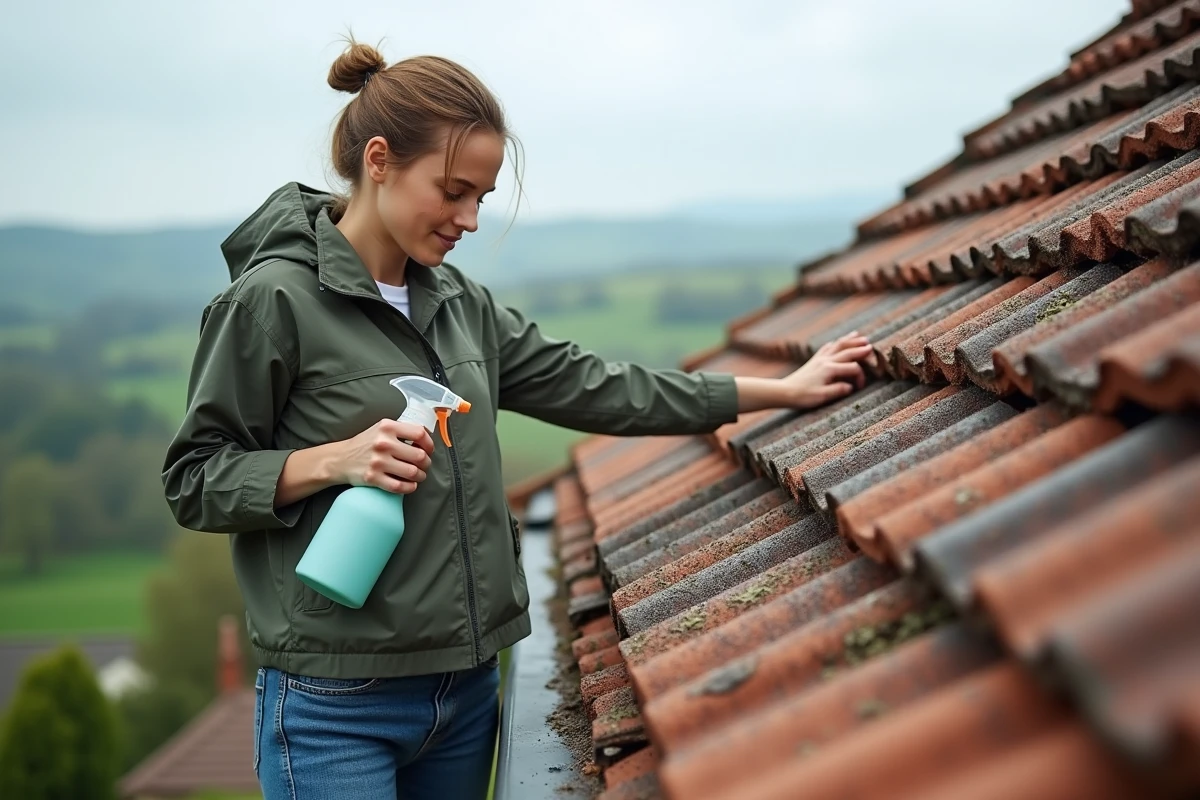
Protecting your roof from algae, moss, and lichens is not limited to a one-time action, but is part of a comprehensive and regular approach. Eco-friendly cleaning solutions, such as baking soda or diluted vinegar, respect the surface of the tiles and preserve the quality of runoff water. This choice reduces environmental impact while extending the lifespan of the covering.
The application of a water-repellent treatment after cleaning acts as a protective film: it prevents water from infiltrating microcracks, slows down the re-establishment of microorganisms, and maintains the roof’s waterproofing in the long term. Some materials even benefit, from their design, from protective granules that gradually release anti-algae agents: their effectiveness extends over several seasons, limiting the need for repeated interventions.
To maintain these results, vigilance remains essential. A simple maintenance schedule proves to be remarkably effective: regular roof inspections, checking the condition of the tiles, pruning neighboring trees to limit shade and thus humidity, and systematic cleaning of gutters to avoid water stagnation. These simple actions limit the formation of new deposits and sustainably protect the waterproofing of the covering.
Combining maintenance routines with environmentally friendly products offers solid protection for your roof against the proliferation of algae while preserving the value of the building. A healthy roof is the promise of a heritage that withstands the seasons without weakening.