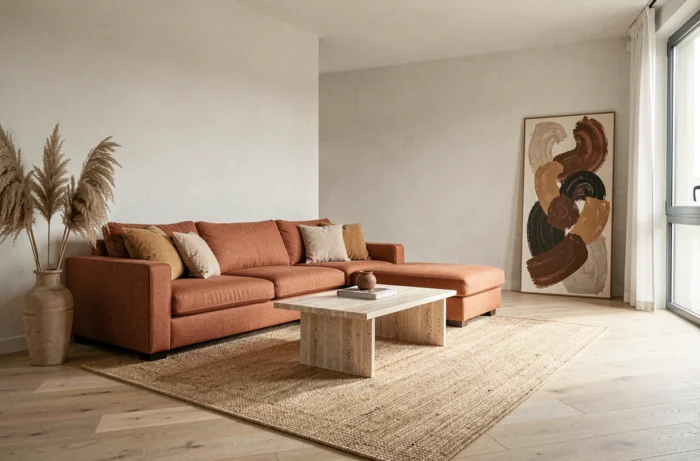
Interior decoration in 2024 involves choices that go beyond color palettes and textures. Behind the visual trends, regulatory constraints and practical changes are reshaping how we design a living space. Legally mandated reuse, mandatory sorting of furniture products, and reduced interior spaces due to insulation work: these realities weigh as heavily as aesthetic choices on interior decoration in 2024.
Reuse in interior decoration: a regulatory obligation, not a trend
The extended producer responsibility (REP) framework for construction products and materials sets quantified reuse targets: 2% in 2024, 4% in 2027, and 5% in 2028. These thresholds turn reuse into a measurable constraint for the entire sector.
Specifically, second-hand doors, flooring, radiators, sanitary fixtures, and secondary works elements fall within this scope. For those renovating or decorating an interior, this means that building professionals are required to offer reuse solutions. The supply of old materials is therefore mechanically increasing, and specialized recycling centers for construction are multiplying.
By exploring interior decoration on siaarchitecture.fr, one can see how an architect’s work now integrates these reuse constraints into the very design of a decorative project.
The issue goes beyond mere activism: incorporating an old door or reclaimed flooring into a contemporary interior requires technical know-how (treatment, dimensional adaptation, compatibility with existing insulation). Field reports vary on this point, with some craftsmen noting additional costs related to bringing old materials up to standard, while others observe net savings on raw material costs.
Triman labeling and sorting of decorative products: what buyers need to know
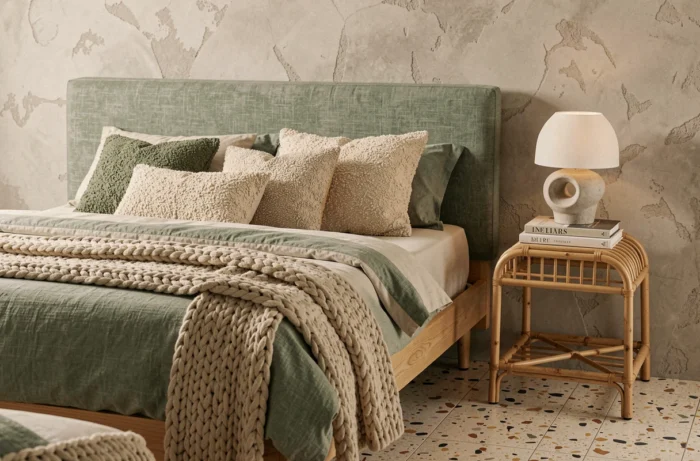
The regulatory framework for sorting has evolved significantly in recent years, and the dates need to be clearly stated. The Triman labeling, which indicates sorting instructions, has applied to furniture products since December 15, 2022. Textile decoration items (curtains, cushions, throws) have been subject to this obligation since August 25, 2023. Construction products and materials will be subject to it starting September 28, 2024.
When choosing a light fixture, wall covering, or decorative textile, the presence of the Triman label informs about the associated recycling stream. Its absence on a new product sold in France may indicate a manufacturer’s compliance issue.
What this changes in daily life
- When purchasing a piece of furniture or decorative object, checking for the Triman logo and the associated sorting instructions ensures that the product complies with current regulations.
- When parting with a decorative item, the collection points dedicated to furniture and textiles differ. Confusing the streams slows down effective recycling.
- For construction products (tiles, paint, flooring), the REP building framework imposes specific return points, often located at recycling centers or with partner distributors.
Energy renovation and decoration: when insulation reshapes the layout
Interior thermal insulation, replacing windows, and installing efficient ventilation change the available volumes. Internal double insulation reduces the usable area of each affected room. This loss of space has direct consequences on furniture choices and space organization.
Modular and multifunctional furniture becomes a practical response to this contraction of volumes. A convertible sofa with integrated storage, an extendable table, or wall shelves replacing a floor-standing bookcase are no longer just stylistic choices: they compensate for the lost centimeters.
Balancing thermal performance and aesthetics
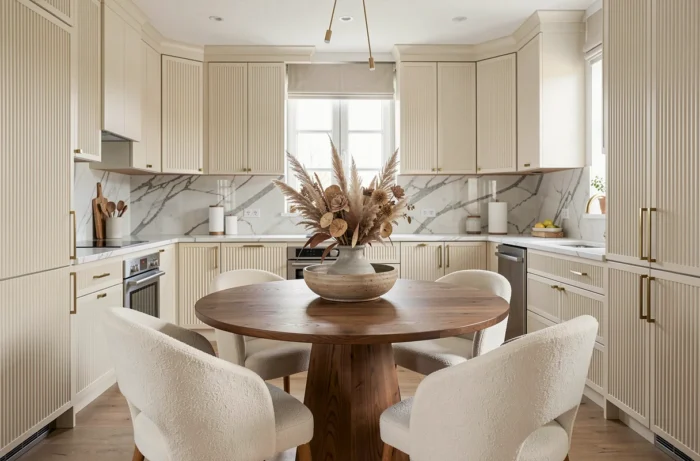
Replacing a small-paned window with a high-performance double or triple-glazed window alters the light ratio in a room. The thicker profiles of new windows sometimes reduce the glazed area. However, the sound and thermal insulation performance transforms the perceived comfort, influencing color and textile choices.
A better-insulated interior can tolerate darker shades without feeling oppressive, as the uniform temperature and absence of drafts change the perception of space. Available data does not allow for precise quantification of this effect, but interior designers working on energy renovations regularly observe this discrepancy between actual volume (reduced) and perceived comfort (improved).
Colors and materials 2024: what the palettes really convey
Warm shades dominate this year’s presentations from publishers. Terracotta, shades of green, and peach color appear in most catalogs. These palettes extend a movement that has been underway for several seasons rather than marking a break.
On the materials side, the return of chrome and transparent surfaces noted by several sources contrasts with the recent dominance of raw wood and linen. This shift towards colder and more reflective finishes accompanies a renewed interest in references from the 1980s, also visible in furniture with bold geometric shapes.
Ribbed velvet and boucle fabric remain present in the textile offering, but their omnipresence over the past three years raises questions about their stylistic durability. Opting for neutral textiles in structure and reserving material effects for accessories (cushions, throws, curtains) limits the risk of fatigue and the cost of a complete renewal.
The most significant underlying trend may be the one that is least visible: the regulatory framework now weighs on every step of a decorative project, from purchasing to sorting to material selection. Decorating an interior in 2024 means navigating obligations that did not exist three years ago and that will continue to strengthen in the coming years.