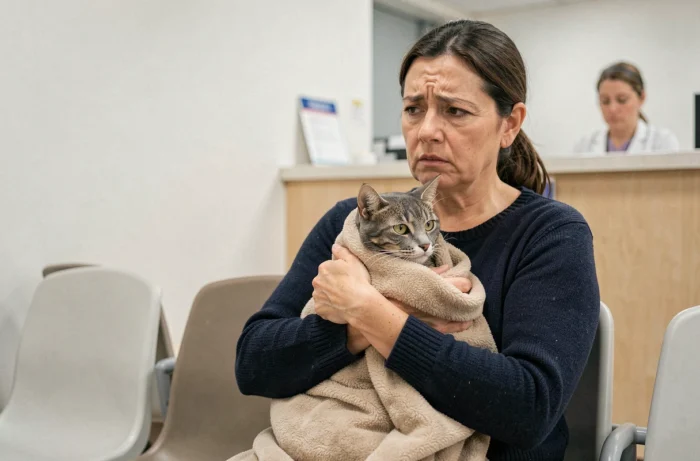
A veterinarian who refuses to take care of a cat places its owner in a difficult situation to interpret. Is the refusal a legitimate right of the practitioner or a sanctionable fault? The answer depends on a single determining criterion: the clinical qualification of the situation at the time the owner presents.
Veterinary emergency and refusal of consultation: what the rural code imposes
The legal framework is based on a clear distinction. Article R.242-48 of the Rural and Maritime Fishing Code, which incorporates the veterinary code of ethics, establishes two regimes depending on whether the animal is in an emergency situation or not.
| Clinical Situation | Veterinarian’s Obligation | Margin of Refusal |
|---|---|---|
| Emergency (respiratory distress, hemorrhage, shock, acute pain) | Provide assistance within the limits of their skills and available resources | None, except proven technical incapacity |
| Non-emergency (follow-up consultation, vaccination, health check) | No obligation to accept the client | Total, without obligation to justify |
| Interruption of follow-up during treatment | Ensure continuity of care and transfer the file to the chosen colleague | Possible, but framed by transition obligations |
The tipping point is the qualification of urgency. A cat that presents with a urinary obstruction, trauma, or active hemorrhage falls into the category where the refusal of care is prohibited by the code of ethics. On the other hand, an owner requesting a routine appointment may be met with a refusal without the practitioner needing to provide a reason.
The rights of the cat owner in the face of a refusal therefore directly depend on the state of the animal at the time of the consultation request.
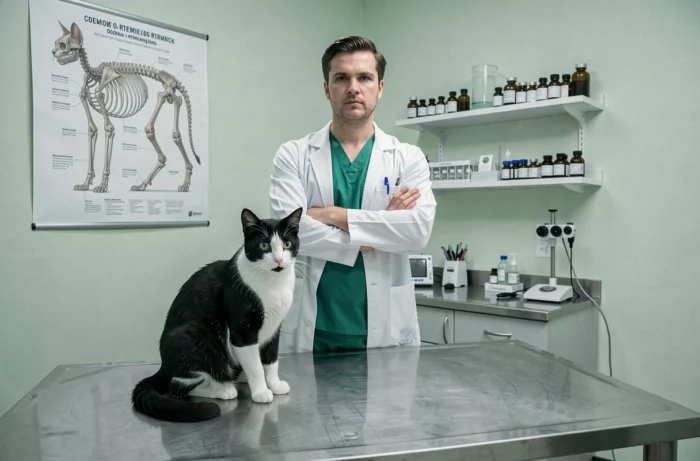
Continuity of care after a refusal: the obligation that many owners are unaware of
A veterinarian who decides to end the relationship with a client cannot do so overnight if treatment is ongoing. The National Council of the Order of Veterinarians specifically regulates this situation in its practical sheets.
The practitioner must transmit useful medical information to the colleague chosen by the owner. This transmission covers the diagnosis made, treatments administered, analysis results, and follow-up recommendations. The goal is to avoid a detrimental interruption for the animal.
The procedure recommended by the Order of Veterinarians provides for sending a registered letter with acknowledgment of receipt. This letter informs the client of the decision to no longer provide care for their animal and allows a reasonable time frame to organize the transfer to another practitioner.
- The veterinarian must maintain necessary care during the transition period if the animal’s condition requires it
- The animal’s medical file remains accessible to the owner or the newly designated practitioner
- No withholding of information can be opposed on the grounds of an unpaid bill or personal conflict
This framework protects the animal from a sudden interruption of treatment. An owner who is notified of a refusal of care while their cat is undergoing chemotherapy or a long-term antibiotic protocol therefore has a concrete lever: to demand the complete transmission of the medical file.
Owner’s recourse in the face of a refusal of veterinary care
The avenues for recourse differ depending on the nature of the refusal. A refusal in an emergency situation and a refusal outside of an emergency do not call for the same response.
Referral to the Order of Veterinarians
The Regional Council of the Order of Veterinarians can be contacted by any owner who believes that a practitioner has failed in their ethical obligations. The disciplinary chamber can impose sanctions ranging from a warning to removal from the register. This procedure is free and does not require a lawyer.
The referral is particularly relevant when the refusal concerns a proven emergency situation. The owner will need to document the state of the animal at the time of the refusal (certificate from another veterinarian consulted afterward, photos, testimonies).
Civil liability of the veterinarian
If the refusal has caused harm to the animal (worsening of health, death), a civil liability action can be brought before the judicial court. The owner must prove three elements: the fault (unjustified refusal in an emergency), the damage suffered by the animal, and the link between the two.
The practical difficulty lies in proving the urgency. A veterinary certificate issued quickly after the refusal is the most determining piece of evidence to characterize the practitioner’s fault.

Informed consent and veterinary estimate: mutual obligations
The code of ethics requires the veterinarian to obtain the informed consent of the owner before any intervention. This obligation works both ways: the practitioner explains the diagnosis, therapeutic options, and their consequences, and the owner accepts or refuses the proposed treatment.
An owner may refuse a procedure deemed too costly or too invasive. The veterinarian must then propose alternatives compatible with the animal’s well-being or refer to a colleague. This refusal by the owner does not relieve the practitioner of their obligation to provide advice.
- The veterinarian must provide a detailed estimate for any care exceeding a routine procedure
- The owner may seek a second opinion without this constituting a break in the care relationship
- The owner’s refusal of treatment must be recorded in the animal’s medical file
The veterinarian-owner relationship is based on a balance between the practitioner’s freedom of choice and the protection of the animal. Outside of emergencies, refusal is a right for each party. In emergencies, only the animal dictates the course of action, and neither the practitioner nor the owner can evade this without incurring their responsibility.