
A cat urinating outside its litter box, a dog destroying the sofa in your absence: in most cases, the problem does not stem from the animal’s character but from an unmet daily need. Caring for your pet involves concrete, repeated, sometimes counterintuitive actions that go far beyond the food bowl and annual vaccination.
Commitment Certificate and Legal Responsibility Before Adoption
Since Law No. 2021-1539 of November 30, 2021, aimed at combating animal abuse, anyone who adopts or buys a dog or cat must sign a commitment and knowledge certificate before acquisition. This document requires acknowledgment of the species’ needs, the duration of commitment, and associated costs.
In practice, many owners sign this certificate without really reading it. However, the document lists concrete obligations: suitable living space, regular veterinary care, socialization. Reviewing this certificate a few months after adoption allows one to check that they are still meeting their initial commitments, as detailed on the Univers Animaux website with practical reminders for each type of animal.
This legal framework changes the game: a neighbor, an ex-spouse, or an association can now report a failure to meet the animal’s fundamental needs. The owner’s responsibility is no longer limited to feeding and vaccinating.
Environmental Enrichment for Dogs and Cats

Recent recommendations from ANSES and the National Order of Veterinarians place cognitive stimulation on par with feeding and deworming. Preventing boredom is a daily care task in its own right, not a luxury reserved for available owners.
For an indoor cat, this means scratching posts positioned at different heights, elevated hiding spots, and food-search games (kibble hidden in a digging mat, for example). The goal is to replicate a minimum of natural hunting behavior.
For dogs, olfactory walks advantageously replace forced jogging. The animal is allowed to sniff at its own pace, change direction, and explore. Twenty minutes of olfactory walking tires a dog more than half an hour of brisk walking on a tight leash.
- Vary walking routes each week to renew the dog’s sensory stimulation
- Offer the cat at least two different types of games per day (feather, ball, food puzzle) in rotation
- Create quiet retreat areas where the animal can isolate itself without being disturbed, especially in a household with children
Feedback varies on this point, but several behaviorists report a significant reduction in destruction and excessive meowing after two to three weeks of regular environmental enrichment.
Appropriate Feeding and Daily Weight Monitoring
Obesity in dogs and cats is now recognized as a public veterinary health issue. An overweight animal is more likely to develop diabetes, joint disorders, and heart conditions. The actual amount of food ingested is often underestimated when adding up the bowl, training treats, and table scraps.
Weighing the daily ration with a kitchen scale remains the most reliable action. The dispensers integrated into kibble bags lack precision, and the difference between the recommended dose and the actual amount served can easily reach a third more.
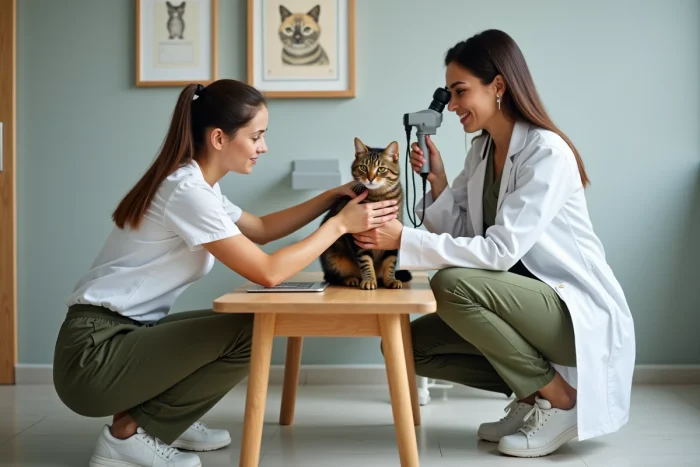
The diet must also correspond to the age and activity level. A neutered seven-year-old dog does not have the same needs as a growing puppy. Requesting a nutritional assessment from the veterinarian during the annual visit allows for adjusting the ration without falling into trendy diets.
Antiparasitics and Deworming: Real Rhythm to Follow
The dewormer does not kill the worms: it breaks their reproductive cycle. For this reason, a single treatment is never sufficient. The standard recommendation is to deworm your animal with each change of season, or four times a year for a dog or cat that goes outside regularly.
For external antiparasitics (fleas, ticks), the choice of product depends on the animal’s lifestyle:
- Spot-on pipettes are suitable for dogs and cats that do not tolerate collars well, with a monthly application generally
- Antiparasitic collars provide prolonged protection over several months, convenient when monthly reminders are forgotten
- Sprays and shampoos treat a one-time infestation but do not replace regular preventive treatment
- Treating the habitat (bed, sofa, carpet) complements the treatment of the animal, as flea larvae can survive for several weeks in textile fibers
A often overlooked point: the risk of infestation exists even for an indoor animal. We bring parasites in on our shoes, on our clothes, or via another animal encountered in the stairwell.
Dental Hygiene and Common Care Often Forgotten
Dental plaque in dogs accumulates within a few days. Without brushing, it turns into tartar, a source of gum infections and pain that goes unnoticed because the animal continues to eat. Getting your dog used to tooth brushing from a young age greatly simplifies this care in adulthood.
For cats, tartar removal under anesthesia remains the only effective solution once tartar has formed. This deadline can be delayed by offering abrasive-textured kibble and regularly inspecting the mouth.
Nails, eyes, and ears deserve the same attention. Overgrown nails alter the animal’s posture and can lead to joint pain over time. Cleaning the ears every two weeks is sufficient for most breeds, except for dogs with droopy ears that require more frequent attention.
Daily care for a pet ultimately comes down to a handful of regular actions, tailored to the real needs of the species and the individual. Weighing the ration, enriching the environment, timely antiparasitics, quick inspections of teeth and nails: these habits take just a few minutes each day and can prevent most emergency veterinary consultations.